
Original Dragon Kenpo
Self-Defense Requirements




















What Is Dragon Kenpo?
Dragon Kenpo is a Kenpo-based self-defense system most commonly connected to Ed Hutchison, who is credited in several Dragon Kenpo sources as the founder, organizer, or developer of the art. Some older online discussions spell his name as Hutchinson, but most Dragon Kenpo sources use Hutchison. A preserved Dragon Kenpo article describes the system as an offshoot of American Kenpo and states that Hutchison trained under Jay T. Will, who was connected to the Ed Parker Kenpo lineage. [1]
At its core, Dragon Kenpo was more than a list of techniques. It was also a way of thinking about martial arts: practical, open-minded, and always evolving. Some people describe Dragon Kenpo as a self-defense system, while others describe it as a philosophy that allows martial artists to build their own personal expression. In a 2004 MartialTalk discussion, Doug Turner described Dragon Kenpo as something broader than one fixed combat system. [6]
That open approach is one reason Dragon Kenpo developed different branches over time. Some practitioners preserved the original Ed Hutchison material, while others blended Dragon Kenpo with American Kenpo, Jeet Kune Do, Kali, Muay Thai, Judo, Jujitsu, Taekwondo, Kung Fu, Hapkido, and other arts. Shawn Armstrong’s Dragon Kenpo history also describes the system as a streamlined self-defense art that continued to evolve through different practitioners and offshoot systems. [1] [8]
Ed Hutchison and the Creation of Dragon Kenpo
Ed Hutchison is the main figure in the early history of Dragon Kenpo. The preserved Dragon Kenpo article says Dragon Kenpo was developed by Hutchison, who trained under Jay T. Will, a student of Ed Parker. [1]
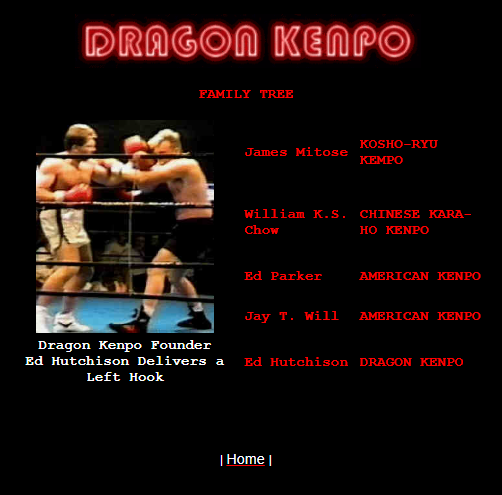
Shawn Armstrong’s history gives a similar lineage. Armstrong states that Hutchison learned Kenpo from Jay T. Will, who had studied under both Ed Parker and Al Tracy. This places Dragon Kenpo inside the larger American Kenpo family tree, connected through names such as James Mitose, William K.S. Chow, Ed Parker, Al Tracy, Jay T. Will, and Ed Hutchison. [8]
Dragon Kenpo appears to have been designed as a practical self-defense system rather than a highly traditional martial art. Instead of focusing heavily on forms or tournament-style training, Dragon Kenpo sources describe the art as direct, simple, and based around realistic attacks such as grabs, chokes, punches, kicks, and sudden street assaults. [8]
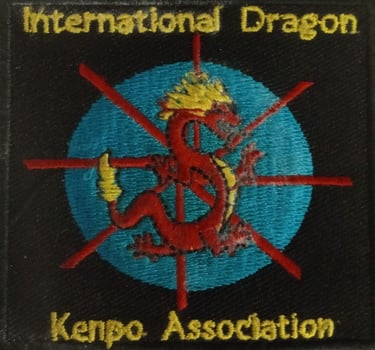
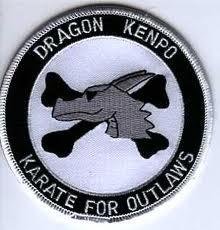
Dragon Kenpo Karate Academy patch associated with Ed Hutchison’s Dragon Kenpo. Image source: PCWOOD’s Kenpo Patch Collection — Group 4. [19]
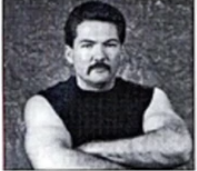
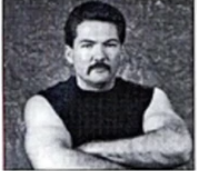
Ed Hutchison, founder of Dragon Kenpo. Image source: archived DragonKenpo.com via the Internet Archive Wayback Machine. [20]
Ed Hutchison boxing photo and martial arts lineage image from archived DragonKenpo.com. Image source: Internet Archive Wayback Machine. [21]
The Dragon Kenpo Creed and Philosophy
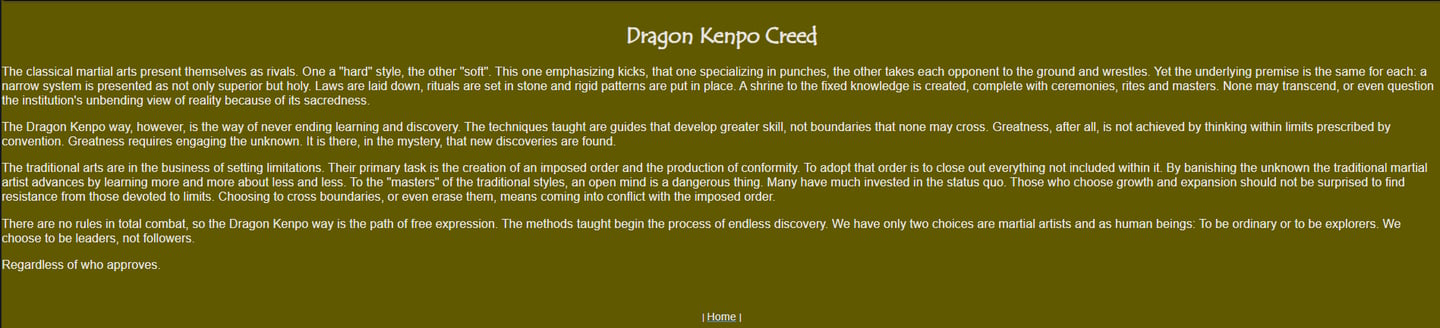
One of the most important pieces of Dragon Kenpo history is the Dragon Kenpo Creed. The creed presents Dragon Kenpo as a path of constant learning, discovery, and personal growth. Instead of treating techniques as rigid rules, the creed explains that techniques are guides meant to help the martial artist develop greater skill. [22]
The creed also shows why Dragon Kenpo was not meant to be trapped inside one narrow method. It pushes back against martial arts politics, rigid traditions, and the idea that one system has all the answers. The message is clear: a martial artist should keep learning, keep testing ideas, and keep growing beyond fixed boundaries. [22]
This philosophy is similar in spirit to Bruce Lee’s Jeet Kune Do. Bruce Lee’s JKD emphasized personal expression, freedom from rigid styles, and the idea of having “no limitation as limitation.” The Bruce Lee Foundation describes Jeet Kune Do’s symbol as including the phrase “using no way as way; having no limitation as limitation,” and Bruce Lee’s official philosophy page also highlights personal expression and freedom from limitation. [23] [24]
Dragon Kenpo should not be described as Jeet Kune Do, but the creed clearly echoes many of the same ideas: open-minded training, practical self-defense, personal expression, and the freedom to keep evolving. In that way, the Dragon Kenpo Creed helps explain why many Dragon Kenpo practitioners cross-trained in other arts and developed their own personal versions of the system. [6] [9] [22]
Dragon Kenpo Creed from the archived DragonKenpo.com website. The creed presents Dragon Kenpo as a path of free expression, continued learning, and personal discovery. Its philosophy is similar in spirit to Bruce Lee’s Jeet Kune Do idea of moving beyond rigid styles and limitations. Image source: archived DragonKenpo.com via the Internet Archive Wayback Machine. [22]
The Original Dragon Kenpo Training Method
Dragon Kenpo training was often described as practical, direct, and self-defense based. Armstrong’s history states that Dragon Kenpo removed the common solo forms found in many Kenpo systems, although it also notes that studying older forms could still be useful for some practitioners. Instead of forms, the system used standardized self-defense techniques against common street attacks. [8]
These techniques were not meant to be the final limit of the art. Armstrong describes the techniques as a starting point for a practitioner’s self-study and exploration, which matches the Dragon Kenpo Creed’s emphasis on growth and discovery. [8] [9]
This makes Dragon Kenpo different from some traditional martial arts systems. In many systems, students are expected to preserve a fixed curriculum exactly as it was received. Dragon Kenpo, by contrast, appears to have encouraged students to understand the purpose behind techniques and then continue refining their own method.
The Dragon Kenpo Distance-Learning Program
One of the most unique parts of Dragon Kenpo history was its home study program. The preserved Dragon Kenpo article says Ed Hutchison believed many martial arts schools used sparring, forms, and testing fees to stretch out training. In response, he created a system that students could study from home through video tapes. [1]
This made Dragon Kenpo part of the early distance-learning martial arts world. Before YouTube, Zoom, and modern online courses, students often learned through VHS tapes, mail-order programs, printed material, audio tapes, old websites, and message boards. Dragon Kenpo became strongly connected to that early internet and home-study era.
An important piece of this history is the research connected to Dr. Bobby Newman of Queens College, CUNY, and Orca Dragon Kenpo. A research paper titled “Video modeling versus in vivo modeling and reinforcement in martial arts instruction” was presented at the annual convention of the International Association for Behavior Analysis in May 1997 in Chicago, Illinois. The study compared students learning martial arts techniques through video-taped instruction with students learning through a live instructor. [26]
The study used commercially available Dragon Kenpo Karate Academy video tapes and compared them with one-on-one instruction. According to the paper, the students in the study learned the tested techniques at a similar speed whether they were taught by video or by a live instructor. The paper concluded that well-made martial arts instructional tapes could help students learn techniques efficiently, while also warning that learning a technique in a controlled home setting is not the same as being able to apply it in a real self-defense situation. [26]
This research is important because it gives Dragon Kenpo’s home-study program more historical weight. It shows that the Dragon Kenpo video program was not only promoted as a convenient way to train, but was also connected to an actual research discussion about whether martial arts techniques could be learned through video instruction. The paper’s author notes state that the tapes used in the study were produced by the Dragon Kenpo Karate Academy, and that Ed Hutchison was the founder of the system and the instructor of the series. [26]
The home-study program also brought debate. In a 2004 MartialTalk discussion, posters mentioned that Ed Hutchison had offered home-study training and rank through the program. Some people saw this as innovative and accessible, while others questioned whether martial arts rank could be earned properly without in-person correction. [6]
A fair way to look at it is this: Dragon Kenpo’s home-study program was both ahead of its time and controversial. It gave people access to training who may not have had a local Kenpo instructor, but it also raised questions that are still debated in martial arts today. The Bobby Newman research helps show why the topic mattered: video instruction could teach technique, but the student still needed practice, motivation, correction when possible, and realistic training experience to make the material useful.
Ed Hutchison and the North American Boxing Council
According to the preserved Dragon Kenpo article, Ed Hutchison stepped away from teaching Dragon Kenpo around 1999 after purchasing the North American Boxing Council, also known as the NABC, and becoming its president. [1]
Outside Dragon Kenpo sources also connect Hutchison to the NABC. BoxingScene described the North American Boxing Council as a professional boxing sanctioning body with its United States office in Indianapolis, Indiana. The same article stated that U.S. operations were managed by NABC President Ed Hutchison and that the NABC had operated in its current incarnation since 1999. [14]
This part of the story matters because it helps explain why the original Ed Hutchison-centered Dragon Kenpo organization changed. As Hutchison moved into professional boxing, Dragon Kenpo students and black belts had to decide how the art would continue.
North American Boxing Council logo used for historical identification in the section about Ed Hutchison’s involvement with the NABC. Image source: Wikipedia / NABC logo file page. [25]
The Closing of the Original Dragon Kenpo Karate Academy
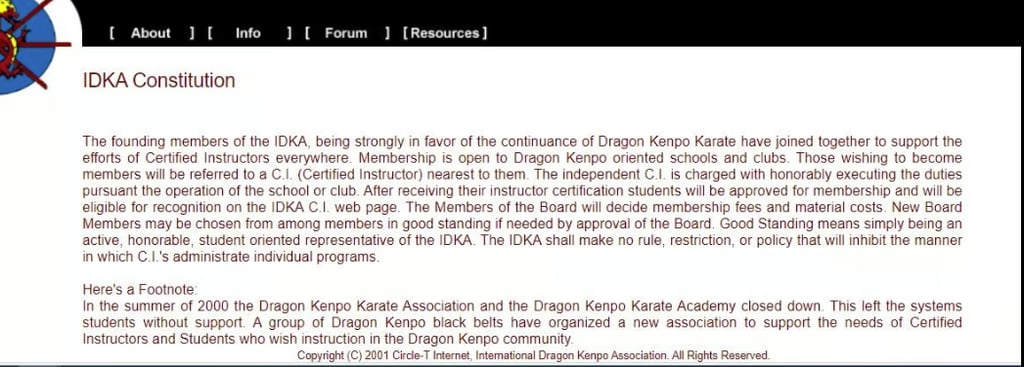
A major turning point came around the year 2000. In a 2004 MartialTalk thread, a poster quoted information from the IDKA website saying that the Dragon Kenpo Karate Association and Dragon Kenpo Karate Academy closed down in the summer of 2000. According to that quoted information, this left students without support, so a group of Dragon Kenpo black belts organized a new association to help certified instructors and students continue. [6]
This was one of the most important moments in Dragon Kenpo history. The original academy may have closed, but Dragon Kenpo did not disappear. Instead, black belts and students began working to preserve, reorganize, and continue the art.
This transition also explains why Dragon Kenpo developed different versions. Some people wanted to preserve the original Ed Hutchison material. Others wanted to expand it, rewrite parts of it, or blend it with their own martial arts backgrounds. What came next was not one single unchanged organization, but a living martial arts family with several branches.
The International Dragon Kenpo Association
After the original academy closed, the International Dragon Kenpo Association, or IDKA, became one of the major efforts to keep Dragon Kenpo connected. The preserved Dragon Kenpo article lists Rodney M. Lacey as Director of the International Dragon Kenpo Association and states that he was granted the title of 8th degree Black Belt by Ed Hutchison. The same source also lists Ron Pfeiffer as Director of Membership of the IDKA. [1]
Doug Turner’s MartialTalk posts are important because they give a first-person look at this period. Turner wrote that he was one of the founders of the International Dragon Kenpo Association. He also explained that Dragon Kenpo was loose and flexible, and that lineage and curriculum could differ depending on the person. [6]
Turner also said that in 2000 he searched online and gathered as many Dragon Kenpo black belts as he could find after the original Dragon Kenpo Karate Academy had “basically gone belly up.” His goal was to create a structure that could support Dragon Kenpo students and instructors after the original organization ended. [6]
Because of this, the IDKA should be seen as more than just an association. It was a preservation effort. It helped keep Dragon Kenpo people connected during a time when the original academy was no longer there to provide support.
This is my personal International Dragon Kenpo Association patch from my own collection. The patch was designed by Doug Turner, and Ron Pfeiffer had the patches made. I’m including it here as one of the original Dragon Kenpo / IDKA patches that I still own. [27]
Screenshot from the archived IDKA.org website showing the Dragon Kenpo / International Dragon Kenpo Association constitution. Image source: Internet Archive / Wayback Machine archive of www.idka.org.
Notable Dragon Kenpo Practitioners and Contributors
Dragon Kenpo’s history continued through many different instructors, black belts, writers, and online contributors. After the original Ed Hutchison era, several people helped preserve the art, support students, continue distance-learning programs, and keep Dragon Kenpo active through websites, newsletters, forums, community programs, and online groups.
Ed Hutchison is the name most closely connected to the beginning of Dragon Kenpo. He is credited in Dragon Kenpo sources as the founder, organizer, or developer of the system. Hutchison’s Dragon Kenpo became known for practical self-defense, home-study training, and a philosophy that encouraged students to keep learning beyond rigid martial arts boundaries. His work helped create the foundation that later Dragon Kenpo students and black belts continued to build upon. [1] [9] [14]
Rodney M. Lacey is listed as Director of the International Dragon Kenpo Association. The preserved Dragon Kenpo article also states that Lacey was granted the title of 8th degree Black Belt by Ed Hutchison. His name is important because he represents the IDKA period after the original Dragon Kenpo organization closed and the art began continuing through black belts and independent practitioners. [1]
Ron Pfeiffer became one of the most recognized names in Dragon Kenpo after the original Ed Hutchison program ended. He is listed as Director of Membership of the IDKA and later became closely connected to World Dragon Kenpo. Slayer News lists Pfeiffer as a 5th degree Black Belt in Dragon Kenpo Karate, and later Dragon Kenpo newsletter material connects him to continued leadership in World Dragon Kenpo. After the closure of the original home-study program, Pfeiffer’s World Dragon Kenpo program became one of the better-known distance-learning options for students who wanted to continue studying Dragon Kenpo. His work helped keep Dragon Kenpo available to students through online training, newsletters, and a structured distance-learning format. [1] [10] [12]
Doug Turner was one of the most active online voices in the Dragon Kenpo community during the message-board era. He discussed Dragon Kenpo history, the IDKA, rank questions, distance learning, and the flexible nature of Dragon Kenpo in online forums. Turner was a 3rd degree Black Belt in Dragon Kenpo and described himself as one of the people involved in forming the IDKA after the original Dragon Kenpo Karate Academy closed. He helped keep Dragon Kenpo connected during a time when much of the art’s activity was happening online. [6] [15]
Turner was also strongly connected to Dragon Kenpo’s early internet presence. He was associated with online Dragon Kenpo discussion, Dragon Kenpo writing, and web-based community building. DragonKenpo.net became an important online resource that preserved Dragon Kenpo articles, newsletters, and community material. It also helped provide a place for Dragon Kenpo practitioners to share ideas and stay connected. Slayer News also shows Turner contributing written material to the Dragon Kenpo community, including articles such as “Black Belt Character.” [10] [11] [12] [13]
Joe Whittington is another important name from the post-Hutchison distance-learning period. He was associated with Combat Kenpo Academy / Combat Kenpo Fighting Academy, which is mentioned in Slayer News material. His program is remembered in Dragon Kenpo circles as a direct, no-nonsense self-defense distance-learning program that focused on practical defense rather than flashy technique. Whittington’s martial arts background included Kenpo Karate, where he held a 3rd Dan, and Combat Jujitsu, where he held a 2nd Dan, along with training in Freestyle Jujitsu, Judo, Combat Sambo, and Brazilian Jiu-Jitsu. That background helped give his program a practical fighting and self-defense approach. [10] [12] [16]
Shawn Armstrong is a later Dragon Kenpo practitioner, writer, and contributor who has helped preserve and explain Dragon Kenpo history, lineage, creed, and training philosophy. His Armstrong Dragon Kenpo material describes Dragon Kenpo as a practical self-defense art connected to Ed Hutchison and continued through later practitioners and offshoot systems. Armstrong’s website lists him as a Third Degree Black Belt in Dragon Kenpo Karate, along with training in Taekwondo, Jun Fan Gung Fu / Jeet Kune Do, Koei Kan Karate Do, and Judo. His later writing on Dragon Kenpo 2.0 shows how Dragon Kenpo has continued to evolve through modern interpretation and personal expression. [8] [29]
Tim Mai is a 2nd degree Black Belt in Dragon Kenpo and represents a later generation of Dragon Kenpo practitioners who continued the art through community-based martial arts instruction. Mai came to Dragon Kenpo while holding a Brown Belt in Ryu Kyu Kempo. His original Ryu Kyu Kempo instructor, Bill Anderson, relocated due to work, which led Mai to continue training under Anderson’s replacement instructor, Wade Miller. Miller taught a mixture of Shito-Ryu Karate and Isshin-Ryu Karate, giving Mai continued exposure to traditional karate while he was also studying Dragon Kenpo. [17]
During his junior year of high school, Mai was offered the opportunity to take over the instructor position and accepted, teaching Dragon Kenpo / Kenpo through the City of Mobile Parks and Recreation community activities program. He continued his relationship with the City of Mobile Parks and Recreation program until 2008. Mai’s path shows how Dragon Kenpo continued beyond the original home-study and online era through local community programs, youth instruction, and practical martial arts teaching. [17]
Jim Patus appears in World Dragon Kenpo material as part of the later Dragon Kenpo community. Slayer News describes him as Indiana State Director of World Dragon Kenpo and says he began Dragon Kenpo under Ed Hutchison. Slayer News also connects him to the Combat Kenpo Fighting Academy curriculum before later training through World Dragon Kenpo. His background shows how Dragon Kenpo continued through students who trained across multiple programs while still preserving a connection to the original Ed Hutchison material. [10] [13]
Steve Amoia appears in Slayer News as a World Dragon Kenpo member and writer. His contributions show how Dragon Kenpo continued through articles, newsletters, and online community involvement, not only through physical schools. Writers and contributors like Amoia helped document the art, share ideas, and keep the Dragon Kenpo community active during the online newsletter era. [10]
Rick Collette appears in Slayer News as a World Dragon Kenpo contributor and webmaster. Slayer News lists him as a 1st degree Black Belt in Tucson, Arizona, and notes that he was a student of Kajukenbo and other arts. His role as a webmaster and contributor shows how important online preservation and communication became to Dragon Kenpo’s later history. [10] [12]
Ed DellaCroce appears in Slayer News as a World Dragon Kenpo contributor and North Carolina State Director. Slayer News lists him as a 2nd degree Black Belt in Dragon Kenpo and notes that he taught a street-oriented self-defense version of the art in Goldsboro, North Carolina. His work represents the practical self-defense side of Dragon Kenpo’s later development. [10] [12]
Randall Hall appears in Slayer News as Texas State Director for World Dragon Kenpo. Slayer News lists him as a 2nd degree Black Belt in Dragon Kenpo and says he first trained under Joe Whittington at Combat Kenpo Academy before moving to World Dragon Kenpo to train under Coach Ron Pfeiffer. His path shows how Dragon Kenpo students often continued their training through multiple Dragon Kenpo-related programs after the original Hutchison era. [10] [12]
Pete Solomon appears in later Slayer News material as a 4th degree Black Belt and Certified Instructor in World Dragon Kenpo. His writing shows that World Dragon Kenpo had active senior members contributing to the community and helping preserve the art through newsletters, online communication, and distance-learning support. [12]
Matt Williams appears in Slayer News as a Dragon Kenpo writer and online contributor. Slayer News listed him as working toward his Yellow Belt in Dragon Kenpo and also noted his previous training and certifications in other martial arts. His inclusion shows that Dragon Kenpo’s online community included both senior black belts and newer students who contributed to the conversation and helped keep the art active. [10] [12]
Other names connected to later Dragon Kenpo and World Dragon Kenpo sources include Rich Miller, Cornelius Matthews, Michael Sweet, Roger Sobrinski, Toby Nokes, Mike Batchelor, R. Michael Sweet, Joel White, and others. Together, these names show that Dragon Kenpo became more than one school or one program. It became a wider network of students, instructors, writers, distance-learning practitioners, online contributors, and community teachers who helped preserve and evolve the art after the original Ed Hutchison era. [10] [11] [12] [13]
Dragon Kenpo in the Yahoo Groups and Message-Boards
Dragon Kenpo was strongly connected to the early internet martial arts world. It spread through old websites, email lists, message boards, Yahoo Groups, online memberships, newsletters, and distance-learning programs.
The preserved Dragon Kenpo article specifically says there were Dragon Kenpo discussion groups on Yahoo for people interested in the art. [1] This is important because it shows that Dragon Kenpo was not only practiced through physical schools. It also existed as an online community.
The 2004 MartialTalk discussion is another example of this online presence. In that thread, people discussed Dragon Kenpo lineage, the home-study course, rank questions, IDKA membership, and the closing of the original Dragon Kenpo Karate Academy. [6]
This online activity helped preserve Dragon Kenpo after the original academy closed. Without the early internet community, many Dragon Kenpo connections may have been lost. Today, old message boards, Yahoo Group references, newsletters, and archived websites are valuable historical sources because they show how Dragon Kenpo practitioners stayed connected.
T
World Dragon Kenpo’s Online Training Model
World Dragon Kenpo’s online training model continued many of the same themes found in the Ed Hutchison era: accessibility, distance learning, personal growth, and practical self-defense.
In the April 2007 Slayer News, Ron Pfeiffer explained that students could log into the online school and begin training. The newsletter also discussed fees, certificates, rank, video testing, and how students could progress through the program. [10]
This model fits the larger Dragon Kenpo idea. Dragon Kenpo was not simply about copying one fixed curriculum. It was about giving students a foundation and allowing them to continue developing through practice, study, and personal experience.
Cross-Training and the Evolution of Dragon Kenpo
Cross-training is one of the strongest themes in Dragon Kenpo history. From its early development under Ed Hutchison to later practitioners and offshoot branches, Dragon Kenpo has often been connected to the idea that martial artists should continue learning, adapting, and improving.
Dragon Kenpo was not presented as a system that had to stay frozen in one exact form forever. The Dragon Kenpo Creed teaches that techniques are guides, not boundaries, and that the martial artist should continue exploring beyond fixed limits. This philosophy helped make Dragon Kenpo a natural place for cross-training and personal martial arts development. [9]
Doug Turner described Dragon Kenpo as something that could differ depending on the person. He explained that his own Dragon Kenpo used American Kenpo concepts with an emphasis on motion, but he also believed martial artists should not limit themselves. This reflects one of Dragon Kenpo’s most important ideas: the art could preserve its roots while still allowing each practitioner to grow through other martial arts experience. [6]
The preserved Dragon Kenpo article makes a similar point. It says some groups preserved the original Dragon Kenpo material while also adding evolved Dragon Kenpo material from arts such as Jeet Kune Do Concepts, Kali, Muay Thai, and other systems. This shows that Dragon Kenpo’s later development was not just about copying the original material, but also about applying the Dragon Kenpo mindset to practical self-defense and personal growth. [1]
Many Dragon Kenpo practitioners had backgrounds in other martial arts. Some came from American Kenpo, Tracy Kenpo, Ryu Kyu Kempo, Taekwondo, Karate, Jujitsu, Judo, Hapkido, Kung Fu, Filipino martial arts, boxing, kickboxing, and grappling systems. This helped create different expressions of Dragon Kenpo while still keeping a connection to the original Ed Hutchison-era material.
Shawn Armstrong is a good modern example of this continued evolution. His Armstrong Dragon Kenpo material presents Dragon Kenpo as a practical self-defense art connected to Ed Hutchison, while also showing how later practitioners continued to build on the system through their own martial arts experience. Armstrong’s background includes Dragon Kenpo Karate along with training in Taekwondo, Jun Fan Gung Fu / Jeet Kune Do, Koei Kan Karate Do, and Judo. [8]
Armstrong’s later work with Dragon Kenpo 2.0 shows this same idea of evolution. His book, Warrior’s Path: The Epic Journey of Modern Karate: Dragon Kenpo 2.0, is listed on Google Books and Amazon as a modern martial arts work focused on Dragon Kenpo 2.0. The listings describe the book as sharing techniques, strategies, and deeper insights developed through decades of martial arts experience. [29] [32]
This makes Armstrong an example of how Dragon Kenpo’s open philosophy continued into newer generations. Dragon Kenpo 2.0 does not replace the historical Ed Hutchison-era material. Instead, it shows how a later practitioner can preserve the roots of Dragon Kenpo while continuing to grow, cross-train, and build a modern interpretation of the art.
In that way, cross-training is not separate from Dragon Kenpo’s identity. It is part of what helped the art continue after the original home-study program, the IDKA period, the message-board era, and the World Dragon Kenpo online training period. Dragon Kenpo’s history shows an art that began with a foundation, but encouraged students and instructors to keep learning beyond that foundation.
The legacy of Dragon Kenpo is not only found in one curriculum or one organization. It is found in the people who kept training, kept questioning, kept adapting, and kept building. Cross-training helped Dragon Kenpo survive, evolve, and remain meaningful to different generations of martial artists.
The Wayback Machine and Preserving Dragon Kenpo History
Because many original Dragon Kenpo and IDKA pages are no longer active, the Internet Archive Wayback Machine is an important tool for preserving this history. The archived DragonKenpo.com captures may help locate older Ed Hutchison-era pages, original Dragon Kenpo material, lineage notes, family pages, and old website information. [2] [4]
The archived IDKA.org captures may also help preserve information about the International Dragon Kenpo Association, including old association pages, membership information, instructor details, and historical notes about the closing of the original Dragon Kenpo Karate Academy. [3] [5]
Archived DragonKenpo.org captures may also be useful for researching later Dragon Kenpo material, including information connected to Doug Turner, Dragon Kenpo online history, and other community records. [18]
These archived pages are important because many early internet martial arts websites disappeared over time. Without the Wayback Machine, much of Dragon Kenpo’s online history could be difficult to recover.
What Dragon Kenpo Was — and What It Became
Dragon Kenpo began as Ed Hutchison’s Kenpo-based self-defense program. It was connected to practical techniques, home study, early internet martial arts culture, and a philosophy that encouraged students to go beyond rigid boundaries. [1] [9]
After Hutchison stepped away and the original Dragon Kenpo Karate Academy closed, the art continued through black belts, students, the IDKA, World Dragon Kenpo, newsletters, message boards, Yahoo Groups, and independent instructors. [6] [10]
Because of that, Dragon Kenpo should not be seen as one single school frozen in time. It is better understood as a living martial arts lineage with several branches. Its history includes Ed Hutchison, the original home-study program, the closing of the original academy, the formation of the IDKA, the Yahoo Groups and message-board era, World Dragon Kenpo, Slayer News, and later practitioners who continued to preserve and evolve the art.
The legacy of Dragon Kenpo is not only a list of techniques. It is a philosophy of self-defense, personal expression, and continued growth. Dragon Kenpo began under Ed Hutchison, spread through distance learning and early internet communities, and continued through black belts and students who adapted the material through their own martial arts experience.
Sources, References, and Image Credits
Primary and Archived Dragon Kenpo / IDKA Sources
[1] Wikibin — “Dragon Kenpo”
Used as a preserved/deleted-Wikipedia-style Dragon Kenpo source for Ed Hutchison, Jay T. Will, Rodney M. Lacey, Ron Pfeiffer, IDKA, Yahoo Groups, and the NABC transition.
https://wikibin.org/articles/dragon-kenpo.html
[2] Internet Archive / Wayback Machine — Archived DragonKenpo.com Captures
Archived captures of the original DragonKenpo.com website. Used for Ed Hutchison-era Dragon Kenpo research, original website material, images, creed material, and historical context.
https://web.archive.org/web/20260000000000*/www.dragonkenpo.com
[3] Internet Archive / Wayback Machine — Archived IDKA.org Captures
Archived captures of the International Dragon Kenpo Association website. Used for IDKA history, association material, constitution material, and archived organizational references.
https://web.archive.org/web/20260000000000*/www.idka.org
[4] Internet Archive / Wayback Machine — Archived DragonKenpo.com Family Page Search
Used to help locate older Dragon Kenpo lineage, family, and related pages from the original DragonKenpo.com website.
https://web.archive.org/web/*/http://www.dragonkenpo.com/family.htm
[5] Internet Archive / Wayback Machine — Archived IDKA About Page Search
Used to help locate older IDKA organizational information and historical notes.
https://web.archive.org/web/*/http://www.idka.org/about/
[18] Internet Archive / Wayback Machine — Archived DragonKenpo.org Captures
Used as a possible source for later Dragon Kenpo material, Doug Turner-related information, and Dragon Kenpo online history.
https://web.archive.org/web/*/dragonkenpo.org
Message Board / Early Internet Sources
[6] MartialTalk — “Information about this organization”
Old message-board discussion about Dragon Kenpo, Ed Hutchison / Hutchinson, the Dragon Kenpo home-study program, the closing of the original Dragon Kenpo Karate Academy, the formation of the IDKA, Doug Turner, lineage questions, rank questions, and Dragon Kenpo’s online community.
https://www.martialtalk.com/threads/information-about-this-organization.14857/
Dragon Kenpo History and Lineage Sources
[7] DragonKenpo.us
Surviving Dragon Kenpo website used as a modern Dragon Kenpo reference source.
https://www.dragonkenpo.us
[8] Shawn Armstrong — Dragon Kenpo History / Lineage
Used for Dragon Kenpo history, lineage, training philosophy, Ed Hutchison lineage material, and Shawn Armstrong’s Dragon Kenpo background.
https://armstrongshawn270.wixsite.com/shawnarmstrong
[9] Dragon Kenpo Blog — Dragon Kenpo Creed / Dragon Kenpo Material
Used as a source for the Dragon Kenpo Creed and Dragon Kenpo philosophy.
https://dragonkenpo.blogspot.com/
World Dragon Kenpo / Slayer News Sources
[10] DragonKenpo.net — Slayer News, April 2007
Used for World Dragon Kenpo, Ron Pfeiffer, online training, Dragon Kenpo community names, staff biographies, contributor names, rank references, and distance-learning information.
https://www.dragonkenpo.net/apr07slayer.html
[11] DragonKenpo.net — Slayer News, March 2007
Used as a World Dragon Kenpo / Slayer News source and supporting Dragon Kenpo newsletter reference.
https://www.dragonkenpo.net/mar07slayer.html
[12] DragonKenpo.net — Slayer News, August 2007
Used for World Dragon Kenpo names, rank references, member information, and later Dragon Kenpo community material.
https://www.dragonkenpo.net/aug07slayer.html
[13] DragonKenpo.net — Slayer News, October 2007
Used for later World Dragon Kenpo newsletter information, staff biographies, and the note that Slayer News had been active since September 2004.
https://www.dragonkenpo.net/oct07slayer.html
Boxing / North American Boxing Council Sources
[14] BoxingScene — North American Boxing Council / Ed Hutchison
Used as an outside boxing source connecting Ed Hutchison to the North American Boxing Council and describing the NABC as a professional boxing sanctioning body.
https://www.boxingscene.com/articles/antonio-mesquita-wants-big-names
[25] Wikipedia — North American Boxing Council / NABC Logo
Article source for the North American Boxing Council and image credit for the NABC logo. Wikipedia lists the logo file as a non-free copyrighted logo used for identification and commentary.
https://en.wikipedia.org/wiki/North_American_Boxing_Council
https://en.wikipedia.org/wiki/File:Nabc_boxing_mma_logo.jpg

Dragon Kenpo Community Research Notes
[15] Doug Turner Rank Note
Doug Turner’s 3rd Degree Black Belt in Dragon Kenpo rank is included from Dragon Kenpo community research. A direct archived DragonKenpo.org, DragonKenpo.net, or IDKA source should be added if available.
[16] Joe Whittington Rank / Background Note
Joe Whittington’s martial arts background is included from Dragon Kenpo community research. His background includes Kenpo Karate, 3rd Dan; Combat Jujitsu, 2nd Dan; Freestyle Jujitsu; Judo; Combat Sambo; and Brazilian Jiu-Jitsu. A direct archived or website source should be added if available.
[17] Tim Mai Biography Note
Tim Mai’s Dragon Kenpo rank and martial arts background are included from personal biography information provided by Tim Mai. Details include: 2nd Degree Black Belt in Dragon Kenpo; 2nd Kyu Red Belt background in Ryu Kyu Kempo under Bill Anderson; continued training under Wade Miller in Shito-Ryu and Isshin-Ryu influenced karate; and Dragon Kenpo / Kenpo instruction through the City of Mobile Parks and Recreation community activities program until 2008.
Patch, Image, and Personal Collection Credits
[19] PCWOOD’s Kenpo Patch Collection — Group 4
Patch image/reference source for Ed Hutchison’s Dragon Kenpo Karate Academy patch.
https://www.pcwood.com/kenpo/patches/group4.html
[20] Internet Archive / Wayback Machine — Archived DragonKenpo.com Ed Hutchison Headshot
Image source for Ed Hutchison headshot from archived DragonKenpo.com.
https://web.archive.org/web/20260000000000*/www.dragonkenpo.com
[21] Internet Archive / Wayback Machine — Archived DragonKenpo.com Ed Hutchison Boxing / Lineage Image
Image source for Ed Hutchison boxing photo and martial arts lineage image from archived DragonKenpo.com.
https://web.archive.org/web/20260000000000*/www.dragonkenpo.com
[22] Internet Archive / Wayback Machine — Dragon Kenpo Creed from Archived DragonKenpo.com
Screenshot / image source for the Dragon Kenpo Creed from the archived DragonKenpo.com website.
https://web.archive.org/web/20260000000000*/www.dragonkenpo.com
[27] Tim Mai Personal Collection — International Dragon Kenpo Association Patch
Photo of my personal International Dragon Kenpo Association patch. The patch was designed by Doug Turner, and Ron Pfeiffer had the patches made. This is one of the Dragon Kenpo / IDKA patches that I still own.
[28] Internet Archive / Wayback Machine — Archived IDKA.org Constitution Screenshot
Screenshot from the archived www.idka.org website showing the Dragon Kenpo / International Dragon Kenpo Association constitution. Used as an archived historical source for the IDKA page.
https://web.archive.org/web/20260000000000*/www.idka.org
[30] Internet Archive / Wayback Machine — Archived DragonKenpo.us Online Curriculum Screenshot
Screenshot from the archived DragonKenpo.us website showing online video clips of the Dragon Kenpo curriculum before the later transition into World Dragon Kenpo. Used as an image credit and historical source for Dragon Kenpo’s early online distance-learning model.
https://web.archive.org/web/*/www.dragonkenpo.us
[31] DragonKenpo.net — World Dragon Kenpo Virtual School Screenshot
Screenshot/image credit for DragonKenpo.net, identified as the World Dragon Kenpo Virtual School maintained by Ron Pfeiffer. Used as an image credit and supporting source for Dragon Kenpo’s continued online training model.
https://www.dragonkenpo.net/
Bruce Lee / Jeet Kune Do Comparison Sources
[23] Bruce Lee Foundation — Jeet Kune Do
Used for comparison to Bruce Lee’s Jeet Kune Do philosophy, including the idea of “using no way as way” and “having no limitation as limitation.”
https://bruceleefoundation.org/jeetkunedo/
[24] Bruce Lee Official Website — The Philosophies
Used for comparison to Bruce Lee’s ideas about self-expression, personal growth, and freedom from limitation.
https://brucelee.com/philosophies/
Dragon Kenpo Home Study / Research Source
[26] Internet Archive / Wayback Machine — DragonKenpo.com Research Page / Dr. Bobby Newman Study
Archived DragonKenpo.com research page featuring Dr. Bobby Newman’s paper, “Video modeling versus in vivo modeling and reinforcement in martial arts instruction.” The paper was presented at the annual convention of the International Association for Behavior Analysis in May 1997 in Chicago, Illinois. It discusses research using Dragon Kenpo Karate Academy instructional tapes. The author notes state that the tapes used in the study were produced by the Dragon Kenpo Karate Academy, and that Ed Hutchison was the founder of the system and instructor of the series.
https://web.archive.org/web/20040402153200/http://dragonkenpo.com/research.htm
Shawn Armstrong / Dragon Kenpo 2.0 Sources
[29] Google Books — Warrior’s Path: The Epic Journey of Modern Karate: Dragon Kenpo 2.0
Book listing for Shawn Armstrong’s Warrior’s Path: The Epic Journey of Modern Karate: Dragon Kenpo 2.0. Used as a source for Armstrong’s later Dragon Kenpo 2.0 writing and authorship.
https://books.google.com/books/about/Warrior_s_Path_The_Epic_Journey_of_Moder.html?id=MgGJEQAAQBAJ
[32] Amazon — Warrior’s Path: The Epic Journey of Modern Karate: Dragon Kenpo 2.0
Amazon listing for Shawn Armstrong’s Warrior’s Path: The Epic Journey of Modern Karate: Dragon Kenpo 2.0. Used as a supporting source for Armstrong’s later Dragon Kenpo 2.0 writing and authorship.
https://www.amazon.com/WARRIORS-PATH-JOURNEY-MODERN-KARATE-ebook/dp/B0DJX35MGR
Research Note
Some Dragon Kenpo history comes from archived websites, deleted-Wikipedia / Wikibin material, old message-board posts, newsletters, Wayback Machine captures, personal collection images, and Dragon Kenpo community research. Because several original pages are no longer active, archived sources are important for preserving the historical record. Where possible, Dragon Kenpo history should be compared across multiple sources, especially archived DragonKenpo.com pages, archived IDKA.org pages, DragonKenpo.org archives, Slayer News, MartialTalk discussions, surviving Dragon Kenpo websites, and personal historical materials.
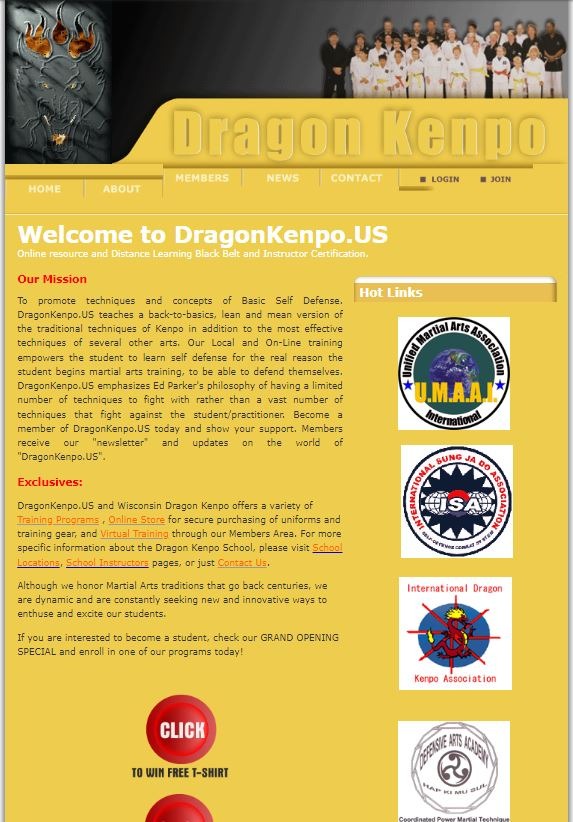
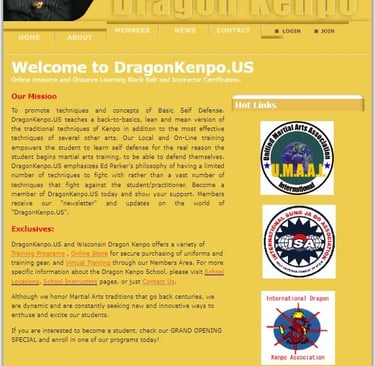
On the left is an Archived screenshot from DragonKenpo.us showing Dragon Kenpo’s early online curriculum/video clip model. Before the later transition into World Dragon Kenpo, DragonKenpo.us offered online video clips of the curriculum, which was very advanced for its time. This screenshot helps show how Dragon Kenpo continued the distance-learning idea from the VHS/home-study era into early online training. Image source: Internet Archive / Wayback Machine archive of DragonKenpo.us. [30]
Above is a Screenshot of DragonKenpo.net, now presented as the World Dragon Kenpo Virtual School maintained by Ron Pfeiffer. The site helped continue Dragon Kenpo’s online presence and distance-learning model into the World Dragon Kenpo era. Image source: DragonKenpo.net / World Dragon Kenpo Virtual School. [31]